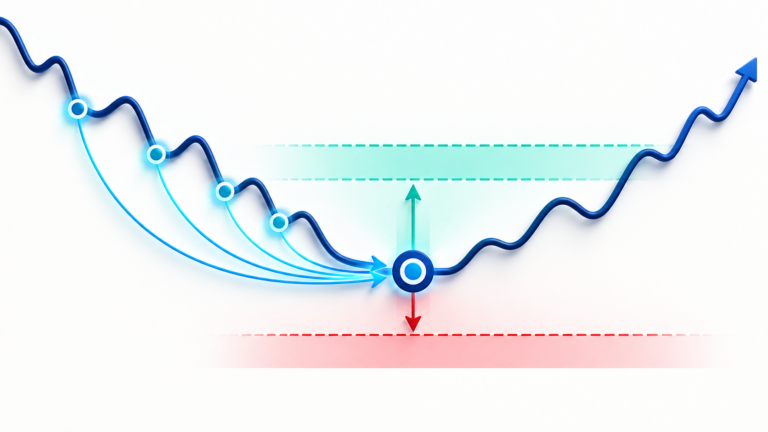

How leverage changes exposure starts with a risk question, not a prediction. Leverage is commonly presented as a return multiplier. In practice, it is first an exposure decision: it lets a smaller amount of collateral control a larger notional position, which magnifies favorable and adverse price moves alike.
Table of contents

Leverage Changes Exposure: A Practical Risk Guide
Leverage changes exposure is most useful when it improves a written risk plan. Use the information here to define assumptions, size exposure conservatively, and decide where the trade is invalidated before money is at risk.
Further reading: Position and Risk Management — CME Group. Check the contract and fee rules published by the venue you use.
Using Leverage Changes Exposure in a Risk Plan
- Check leverage changes exposure before entering rather than after the position becomes stressful.
- Revisit leverage changes exposure when size, margin, costs, or market conditions change.
- Do not treat leverage changes exposure as a standalone prediction or a substitute for a stop loss.
Notional exposure is the number to watch
A $1,000 margin balance at 10x controls roughly $10,000 of notional exposure before fees and platform rules. A one-percent move in the underlying affects that notional amount, not merely the cash posted as margin.
Leverage does not choose a safe position size
Choosing 20x instead of 5x does not make a large position appropriate for a given stop loss. Position size, entry-to-stop distance, and maximum dollar loss are the inputs that define trade risk. Leverage only changes how much margin is needed to carry it.
Higher leverage reduces the margin buffer
For the same notional size, higher leverage usually means less collateral is posted. That generally brings the liquidation estimate closer to the entry, leaving less room for ordinary volatility, fees, and funding.
Margin mode changes where the risk sits
Isolated margin can confine collateral to one position, while cross margin may draw on shared account equity. Neither setting removes the need to control exposure. They change how the account absorbs stress.
Use leverage as the last input
A practical sequence is: choose invalidation, choose a fixed dollar risk, calculate size, then choose the lowest leverage that supports the intended margin usage and leaves a sensible liquidation buffer. This reverses the common habit of selecting leverage first.
Use the Position Size Calculator Before You Enter
Turn the idea into numbers before placing an order. The Position Size Calculator helps you compare the relevant inputs and check whether the planned risk still fits your account rules.
A Practical Checklist
- Define the maximum dollar amount you are willing to lose before entry.
- Check fees, funding, margin mode, and liquidation risk where relevant.
- Use the information in this guide as context rather than a standalone signal.
- Write the invalidation level and exit rule before the trade is live.
- Review the result after the trade so the next decision is evidence-based.
For a related risk-management guide, read Why Your Liquidation Price Changes After Opening a Trade. The goal is not to eliminate uncertainty; it is to make sure uncertainty cannot turn one idea into an uncontrolled loss.
Further reading: Position and Risk Management — CME Group.
Educational content only; this article is not investment advice. Futures and perpetual products carry a substantial risk of loss. Contract mechanics, fees, and available products vary by exchange and jurisdiction.