
Skip to content
  • Trading
    • Indicators
    • Strategies
    • Risk Management
  • Calculators

B:Economic Freedom

BEconomic Freedom

B:Economic Freedom

  • Trading
    • Indicators
    • Strategies
    • Risk Management
  • Calculators
BEconomic Freedom
VWAP line showing a volume weighted intraday price reference
  • Indicators

VWAP Explained: A Practical Reference Point for Intraday Price Context

VWAP is a volume-weighted average over a selected session or anchor. Learn how the reset point changes the line and why crossing it is not a signal.

  • yajirang
  • October 7, 2026
Price structure and volume combined with one indicator in a trade plan
  • Indicators

Price Structure and Volume: A Beginner Framework With One Indicator

Read swing structure first, then use volume as context. A higher volume bar can show activity, but it cannot confirm that a breakout will continue.

  • yajirang
  • October 7, 2026
Higher time frame context paired with lower time frame trade execution
  • Strategies

Higher Time Frame Context and Lower Time Frame Execution: A Practical Guide

Use a small number of chart intervals with distinct roles for context, setup, and execution, without letting conflicting signals move the risk boundary.

  • yajirang
  • October 6, 2026
  • Strategies

When Not to Trade: A Practical Checklist for Avoiding Low-Quality Setups

A practical checklist for identifying late entries, unclear invalidation, poor liquidity, and other reasons to pause before a futures trade.

  • yajirang
  • October 6, 2026
  • Indicators

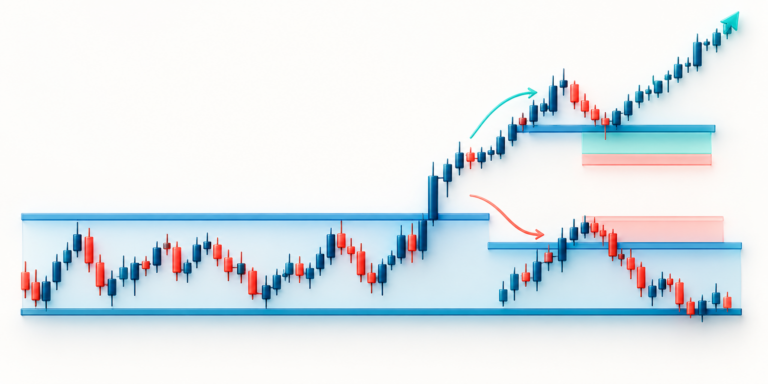
How to Use Multiple Time Frames Without Creating Conflicting Signals

Use multiple time frames without turning them into competing signals. Assign context, setup, and execution separate roles and define which close controls the plan.
  • yajirang
  • October 6, 2026
  • Strategies

Breakout Trading: How to Plan for False Breakouts and Failed Retests

Plan breakout trades with explicit close or retest conditions, a failure level, and position sizing that accounts for fast fills and slippage.

  • yajirang
  • October 2, 2026
  • Strategies

How to Manage a Trade After Entry Without Moving Your Stop Emotionally

Plan stop changes, partial exits, and invalidation before entry so trade management does not expand risk in response to emotion.
  • yajirang
  • October 2, 2026
  • Strategies

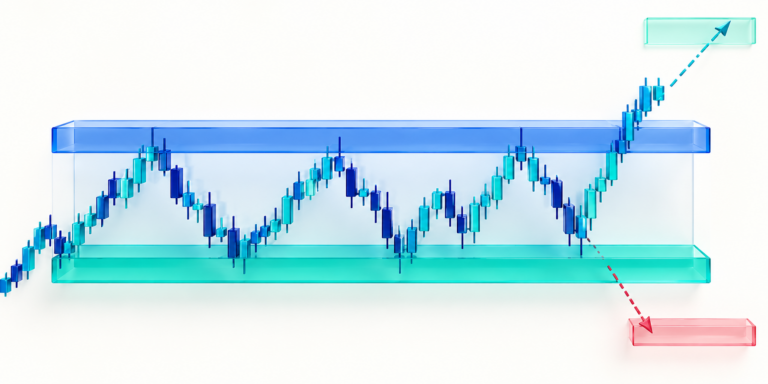
Range Trading Basics: Planning Trades Between Support and Resistance

Learn to frame a range as a hypothesis, plan around broad support and resistance zones, and account for failure, costs, and position size.

  • yajirang
  • October 2, 2026
  • Strategies

Trailing Stops: When They Protect Open Profit and When They End a Trade Too Early

Understand fixed-distance, percentage, and structure-based trailing stops, including how volatility and execution can cause early exits.

  • yajirang
  • October 2, 2026
  • Strategies

Trend Pullback Trading: How to Define Entry, Invalidation, and Risk

A risk-aware guide to trend pullbacks: describe the larger structure, distinguish a retracement from a broken thesis, and size from a defined stop.

  • yajirang
  • October 2, 2026
1 2 3 4
Next

Live Search

No results

Posts

How to Calculate Position Size for Perpetual Futures

September 23, 2026

Isolated vs. Cross Margin: What Changes Your Risk?

September 23, 2026

Why Your Liquidation Price Changes After Opening a Trade

September 28, 2026

How to Set a Stop Loss From a Fixed Dollar Risk

September 28, 2026

A Simple Futures Trade Plan: Entry, Stop Loss, Position Size, and Target

September 30, 2026

Categories

  • Indicators
  • Risk Management
  • Strategies

Trending now

How to Calculate Position Size for Perpetual Futures
Isolated vs. Cross Margin: What Changes Your Risk?
Why Your Liquidation Price Changes After Opening a Trade
How to Set a Stop Loss From a Fixed Dollar Risk

Copyright © 2026 - CreativeThemes, Privacy Policy