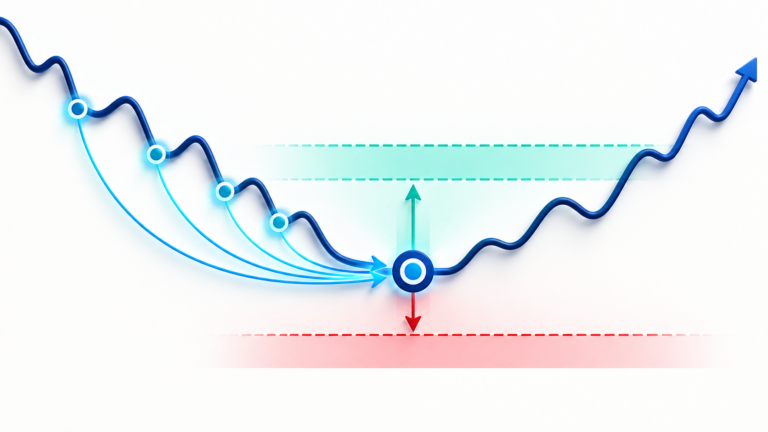

Why your liquidation price changes after opening a trade is a question worth asking before you rely on the number displayed by an exchange. That figure is an estimate based on your current position, collateral, maintenance-margin rules, and account state. If one of those inputs changes, the estimate can move too.
This does not mean the platform is changing the rules mid-trade. It means liquidation is calculated from a live margin situation, not just from your entry price and leverage. Funding, fees, added margin, partial closes, maintenance tiers, and, in cross margin, other positions can all affect the buffer.
Table of contents
Why Your Liquidation Price Changes: The Short Answer
Your liquidation price changes because the amount of collateral supporting a position, the position size, or the exchange’s maintenance requirement may have changed. In cross margin, your account equity can change even when you do nothing to the trade, because unrealized P&L from other positions may be included in the shared margin pool.
A liquidation price is best viewed as a warning threshold rather than a planned exit. It shows where the exchange may start closing a position to protect its required margin. A stop loss and a position size based on a fixed loss limit are still the tools that put you in charge of the exit.
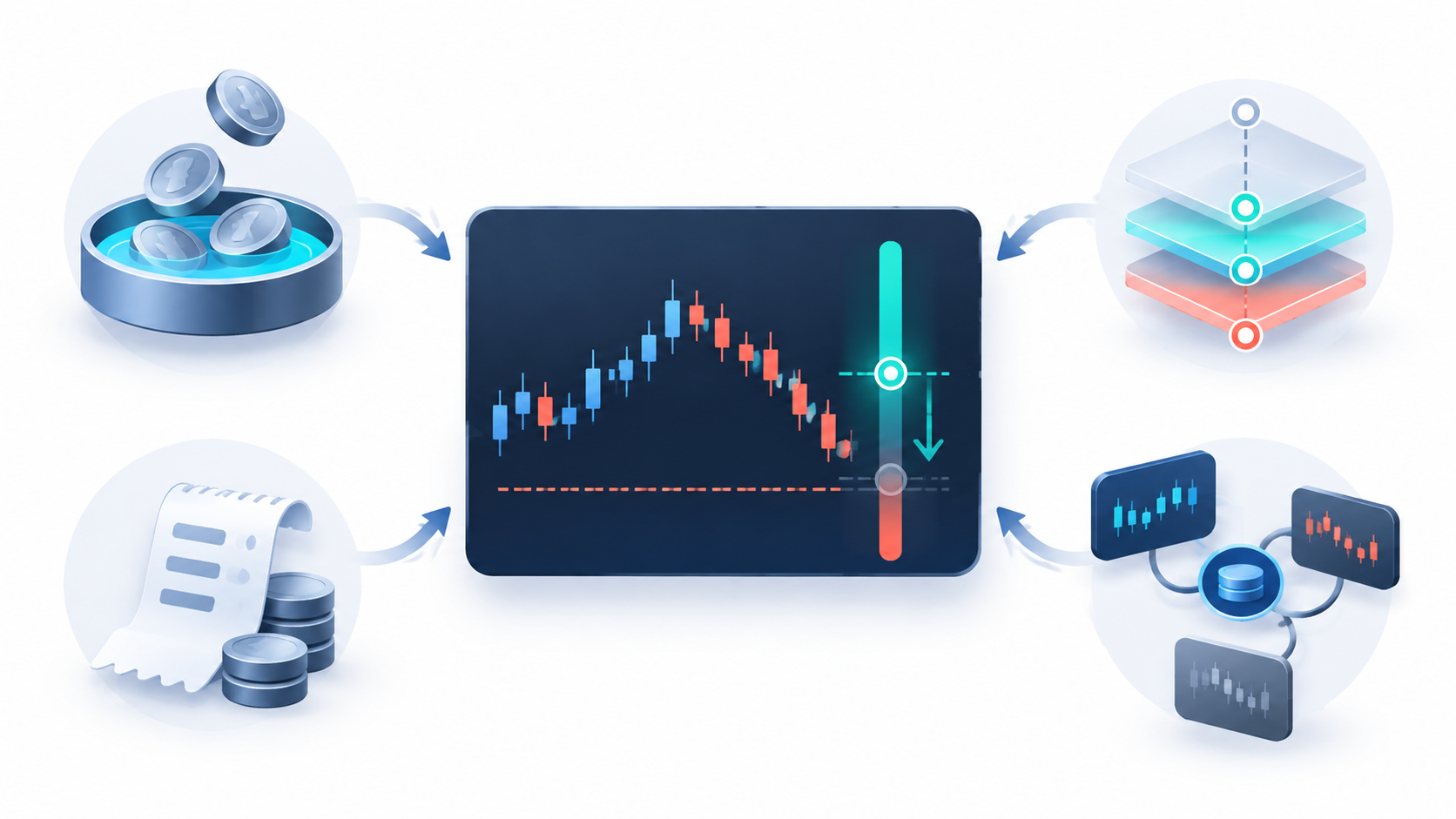
Liquidation Price Changes: A Practical Risk Guide
Liquidation price changes is most useful when it improves a written risk plan. Use the information here to define assumptions, size exposure conservatively, and decide where the trade is invalidated before money is at risk.
Further reading: How to Calculate Liquidation Price — Binance Support. Check the contract and fee rules published by the venue you use.
Using Liquidation Price Changes in a Risk Plan
- Check liquidation price changes before entering rather than after the position becomes stressful.
- Revisit liquidation price changes when size, margin, costs, or market conditions change.
- Do not treat liquidation price changes as a standalone prediction or a substitute for a stop loss.
A Liquidation Price Is a Live Estimate
For a simplified long perpetual position, the exchange compares the position’s value and available collateral with the maintenance margin needed to keep it open. When the account no longer meets that requirement, liquidation becomes possible. The exchange’s exact formula can include contract type, mark price, maintenance-margin tier, fees, and other details that are not captured by a simple leverage calculation.
That is why “entry price divided by leverage” is not a reliable liquidation formula. It may give a rough intuition, but it ignores the maintenance margin that remains required before the position can be liquidated. It also ignores changes after entry.
Use the displayed estimate as a dashboard reading: it is useful, but it reflects the account as it exists now. Review it whenever you add collateral, resize a position, hold through funding, or open another cross-margin trade.
Six Reasons Your Liquidation Price Can Change
1. You add or remove margin
In isolated margin, adding collateral to an open position normally creates a larger buffer and moves the liquidation estimate farther away from the current market price. Removing margin does the opposite. The direction depends on whether the position is long or short, but the principle is the same: less collateral leaves less room for adverse price movement.
2. You partially close or add to the position
A partial close changes position size and may realize P&L. Adding to a position can change the average entry price, the applicable maintenance tier, and the amount of margin required. These are all inputs to liquidation risk. Do not assume the old estimate still applies after scaling in or taking profit.
3. Funding payments and trading fees are applied
Perpetual futures funding transfers value between long and short holders at scheduled intervals. If a payment is taken from your available margin, the safety buffer can narrow. Trading fees, interest-like charges where applicable, and realized losses can have a similar effect. The amount may be small on one event, but it matters more when a position is already close to its threshold.
4. Your maintenance-margin tier changes
Many venues use a tiered maintenance-margin schedule: larger notional positions can require a higher maintenance margin. If you increase size enough to cross a tier boundary, the liquidation calculation may change by more than expected. Always check the contract’s risk-limit or maintenance-margin table before assuming leverage is the only variable.
5. Other cross-margin positions gain or lose value
Cross margin uses eligible account equity as a shared resource. An unrealized loss in another position can reduce the collateral available to support this one, bringing the liquidation level closer. An unrealized gain can temporarily create more room. This is why a trade’s displayed liquidation price may move while its own size and entry price remain unchanged.
6. Exchange rules or contract inputs affect the calculation
Mark price, insurance-fund policy, settlement currency, maintenance calculations, and the way unrealized P&L is counted are exchange-specific. Platform documentation, not a generic formula, is the source of truth for a live trade. For a general explanation of mark price and liquidation, see the Binance Futures liquidation guide and confirm the rules on the venue you actually use.
Isolated vs. Cross Margin: Why the Difference Matters
In isolated margin, changes are usually easier to trace to the position itself: added or removed margin, fees, funding, and changes to size. The collateral is ring-fenced, so unrelated positions are less likely to affect its liquidation buffer.
In cross margin, the calculation is tied to the shared account. That flexibility can give a position more room when spare equity is available, but it can also expose more of the account to one losing trade. If several related markets fall together, the shared cushion can shrink quickly.
If you need a fuller comparison of the two approaches, read Isolated vs. Cross Margin: What Changes Your Risk?. The core point for both modes is unchanged: do not plan to exit at liquidation.
Longs and Shorts Move in Opposite Directions
For a long position, the danger zone is typically below the entry price. Extra collateral usually moves the liquidation estimate lower; less collateral moves it higher. For a short position, the danger zone is typically above the entry price. Extra collateral usually moves the estimate higher; less collateral moves it lower.
The direction is simple, but the exact level is not. Maintenance requirements and contract rules mean two positions with the same entry and leverage can have different liquidation estimates if their collateral, margin mode, or size tier differs.
Check the Liquidation Estimate Before and After Entry
The Liquidation Price Calculator lets you compare a proposed long or short position before you place the order. Enter the intended entry, leverage, margin, and maintenance assumptions, then test what happens if you add margin or change the position size.
Use it alongside a fixed-risk plan. Start by deciding how much you are prepared to lose if the trade is invalidated, set a stop where the market idea no longer holds, and size the position to that stop. The liquidation estimate should sit well beyond that planned exit, not serve as the place where risk management begins.
A Safer Liquidation-Risk Checklist
- Record the entry price, position size, margin mode, and displayed liquidation estimate before placing the order.
- Set a stop loss based on the trade idea, not on the liquidation threshold.
- Recheck the estimate after adding margin, scaling in, scaling out, or holding through funding.
- In cross margin, review the whole account, not just the chart for one position.
- Leave room for fees, funding, slippage, and exchange-specific maintenance requirements.
- Reduce exposure when the estimate is uncomfortably close instead of assuming more leverage will solve the issue.
A changing liquidation price is a reminder that a futures position lives inside a margin system. Monitor the inputs, contain the risk before entry, and use the displayed estimate as an early-warning boundary, not a target.
Further reading: How to Calculate Liquidation Price — Binance Support.
Educational content only; this article is not investment advice. Perpetual futures carry a substantial risk of loss. Contract mechanics and liquidation rules vary by exchange and jurisdiction.