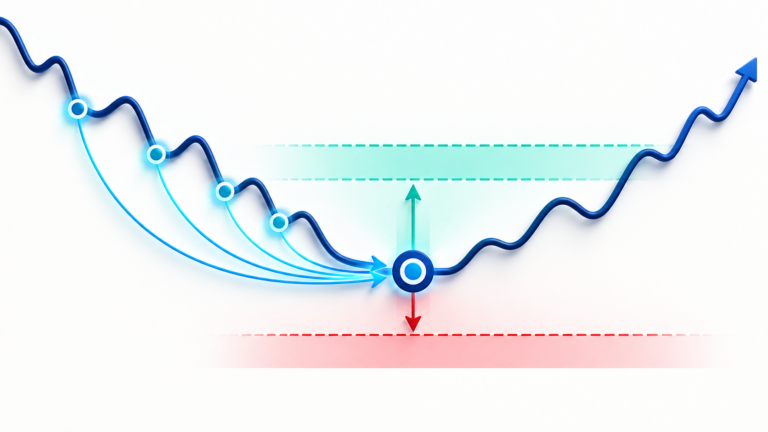

Set a stop loss from a fixed dollar risk starts with a risk question, not a prediction. A stop loss should start with the point where the trade idea is invalidated, not with a random percentage. Once that price is defined, a fixed dollar risk tells you how large the position may be.
Table of contents

Stop Loss From A Fixed Dollar Risk: A Practical Risk Guide
Stop loss from a fixed dollar risk is most useful when it improves a written risk plan. Use the information here to define assumptions, size exposure conservatively, and decide where the trade is invalidated before money is at risk.
Further reading: Proper Position Size — CME Group. Check the contract and fee rules published by the venue you use.
Using Stop Loss From A Fixed Dollar Risk in a Risk Plan
- Check stop loss from a fixed dollar risk before entering rather than after the position becomes stressful.
- Revisit stop loss from a fixed dollar risk when size, margin, costs, or market conditions change.
- Do not treat stop loss from a fixed dollar risk as a standalone prediction or a substitute for a stop loss.
Start with the amount you can lose
Choose one dollar amount that is acceptable if the trade fails. This is a risk budget, not the margin you want to use and not the profit you hope to make. A fixed amount makes every later calculation easier to audit.
Place the stop where the idea is wrong
For a long, the stop generally sits below the level that would invalidate the setup. For a short, it sits above it. Market structure and volatility determine the location; the risk budget determines the position size. Reversing that order is how traders end up moving stops to make an oversized trade fit.
Turn stop distance into position size
The key relationship is simple: position size equals the dollar risk divided by the distance from entry to stop. If a $100 risk budget is paired with a $2 stop distance, the maximum position is 50 units before allowing for fees and slippage. A wider valid stop requires a smaller position.
Account for real execution
A stop is an order instruction, not a guaranteed fill at the exact displayed price. Fast markets, spreads, fees, and funding can increase the final loss. Leave room for those costs rather than sizing every trade to the last cent of the budget.
Keep liquidation beyond the planned exit
Leverage changes the margin required, but it should not replace the stop loss. Check that the estimated liquidation price is comfortably beyond the stop. If it is not, reduce size, add a deliberate margin buffer, or reconsider the setup.
Use the Position Size & Stop-Loss Calculator Before You Enter
Turn the idea into numbers before placing an order. The Position Size & Stop-Loss Calculator helps you compare the relevant inputs and check whether the planned risk still fits your account rules.
A Practical Checklist
- Define the maximum dollar amount you are willing to lose before entry.
- Check fees, funding, margin mode, and liquidation risk where relevant.
- Use the information in this guide as context rather than a standalone signal.
- Write the invalidation level and exit rule before the trade is live.
- Review the result after the trade so the next decision is evidence-based.
For a related risk-management guide, read How to Calculate Position Size for Perpetual Futures. The goal is not to eliminate uncertainty; it is to make sure uncertainty cannot turn one idea into an uncontrolled loss.
Further reading: Proper Position Size — CME Group.
Educational content only; this article is not investment advice. Futures and perpetual products carry a substantial risk of loss. Contract mechanics, fees, and available products vary by exchange and jurisdiction.