
Dca average entry starts with a risk question, not a prediction. DCA average entry is often described as a way to improve an entry price. That is only half the calculation. Every added order changes notional size, the loss at the stop, margin use, and possibly the liquidation estimate.
Table of contents
Dca Average Entry: A Practical Risk Guide
Dca average entry is most useful when it improves a written risk plan. Use the information here to define assumptions, size exposure conservatively, and decide where the trade is invalidated before money is at risk.
Further reading: Proper Position Size — CME Group. Check the contract and fee rules published by the venue you use.
Using Dca Average Entry in a Risk Plan
- Check DCA average entry before entering rather than after the position becomes stressful.
- Revisit DCA average entry when size, margin, costs, or market conditions change.
- Do not treat DCA average entry as a standalone prediction or a substitute for a stop loss.
Average entry is weighted by size
Two equal-sized entries at different prices average differently from one small entry followed by a large one. The relevant average is the total cost of all filled units divided by the total number of units, not a simple average of price labels.
A better average can hide a larger position
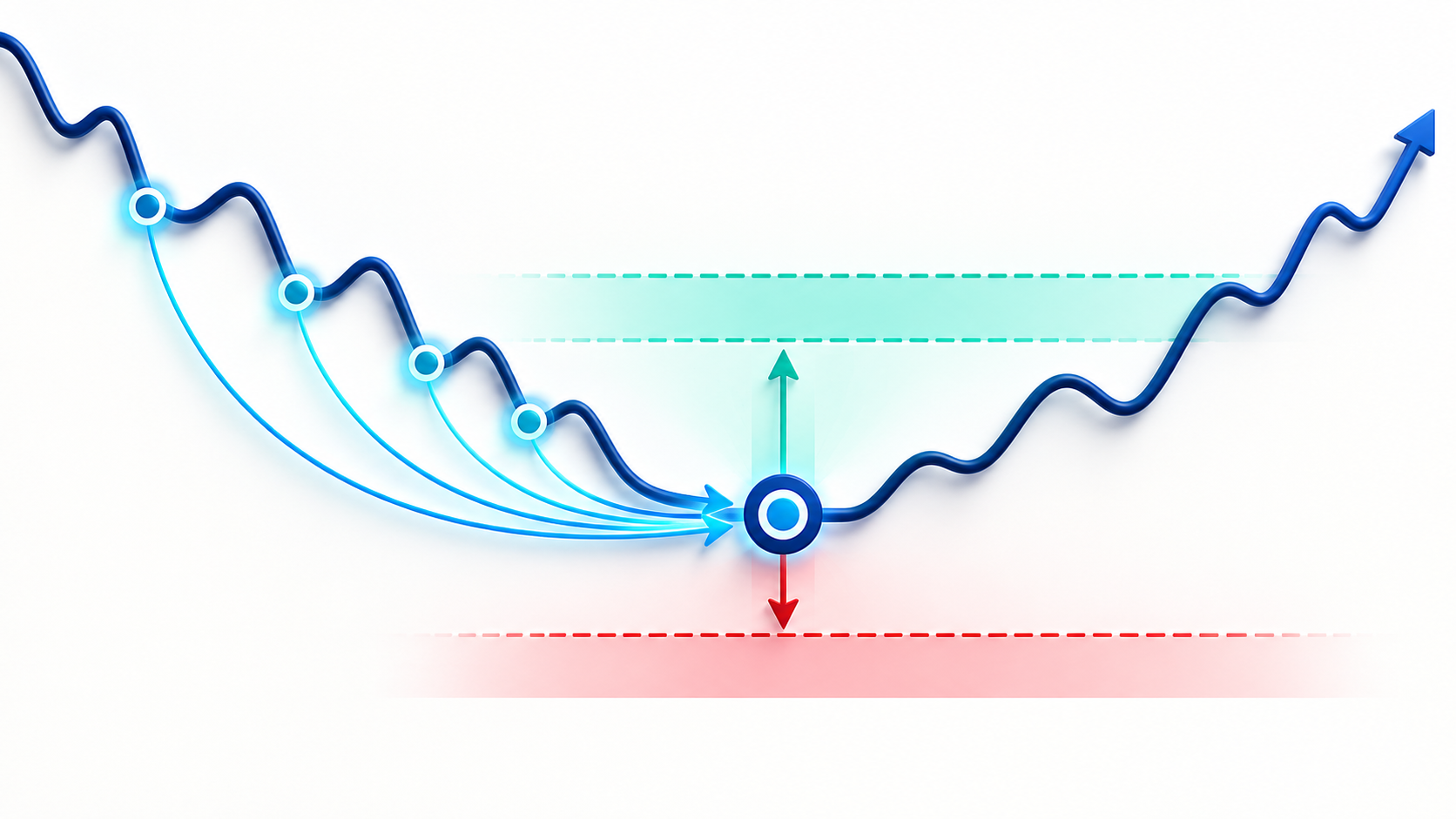
Adding lower to a long can reduce the average entry, but it also increases the number of units exposed if the market continues down. The distance from the new average to the stop may shrink while total dollar loss grows.
Plan each add before opening the first order
A DCA plan should specify entry levels, quantity at each level, the maximum total size, and the final invalidation point. Without those limits, averaging down can become a response to discomfort rather than a preplanned strategy.
Recalculate the stop-loss risk after every fill
The stop price may stay in the same place, but the amount lost there does not. Recheck the total loss at that level after each add, including fees. If the number exceeds the risk budget, the plan has changed.
Watch margin and correlation
In futures, added size affects maintenance requirements and liquidation risk. A position can have a more attractive average entry while becoming structurally harder to manage. Cross-margin accounts add the risk that other positions may reduce the buffer too.
Use the DCA / Average Entry Calculator Before You Enter
Turn the idea into numbers before placing an order. The DCA / Average Entry Calculator helps you compare the relevant inputs and check whether the planned risk still fits your account rules.
A Practical Checklist
- Define the maximum dollar amount you are willing to lose before entry.
- Check fees, funding, margin mode, and liquidation risk where relevant.
- Use the information in this guide as context rather than a standalone signal.
- Write the invalidation level and exit rule before the trade is live.
- Review the result after the trade so the next decision is evidence-based.
For a related risk-management guide, read Isolated vs. Cross Margin: What Changes Your Risk?. The goal is not to eliminate uncertainty; it is to make sure uncertainty cannot turn one idea into an uncontrolled loss.
Further reading: Proper Position Size — CME Group.
Educational content only; this article is not investment advice. Futures and perpetual products carry a substantial risk of loss. Contract mechanics, fees, and available products vary by exchange and jurisdiction.