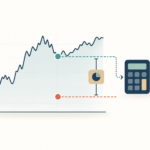

A market order prioritizes execution at available prices; a limit order sets a price boundary but may not execute. Neither order type guarantees the outcome a trader wants, and venue rules determine how specific instructions behave.

What a Market Order Prioritizes
A market order seeks immediate execution against available liquidity. If the visible quantity at the best price is insufficient, the remaining amount may fill at less favorable prices. During fast or thin conditions, the average fill can differ from the last displayed quote. This is often called slippage.
What a Limit Order Controls
A limit order sets the worst acceptable price for a buy or sell, but it does not promise a fill. It can fill partially or not at all if the market moves away. A limit order that crosses the spread may execute immediately and could be treated as a taker under the venue’s fee rules; maker/taker classification is exchange-specific.
Example: The Displayed Book Has Limited Size
Suppose the best offer is $100.00 for 4 units and the next 6 units are offered at $100.10. A market buy for 10 units could average $100.06 before fees if those quantities remain available. A buy limit at $100.00 caps the price, but could receive only 4 units or none. The book can change before an order arrives, so this illustration is not a fill guarantee.
Plan for Partial Fills and Order Duration
A limit order can remain open while only some quantity executes. The filled portion may have a different average price and risk from the unfilled balance. Decide whether to cancel, leave, or replace the remainder and check whether the venue applies different fees to maker and taker executions. Fee labels and post-only or time-in-force options vary by platform; read the product-specific order rules rather than assuming one venue’s behavior applies everywhere.
Choose Around the Trade’s Actual Need
Ask whether price control, immediate execution, or a complete exit matters most, and consider the cost of a missed or partial order. Recalculate stop distance using the actual fill rather than an expected quote. CME Group explains common futures order types; the fee and funding calculator can help model entered fee assumptions.
Educational information only; not investment advice. Futures and perpetual products can result in rapid losses. Exchange rules, fees, contract units, and available products vary. Verify details with your venue.