
Isolated vs. cross margin is not a cosmetic setting in perpetual futures. It determines which part of your account can support a losing position, how quickly liquidation risk can spread, and what you need to monitor once a trade is open.
Neither mode is automatically “safer.” Isolated margin limits the collateral assigned to one position, while cross margin can use available account equity across eligible positions. The better choice depends on whether you are trying to contain one trade’s downside or deliberately managing a portfolio of related positions.
Table of contents
Isolated vs. Cross Margin: The Quick Answer
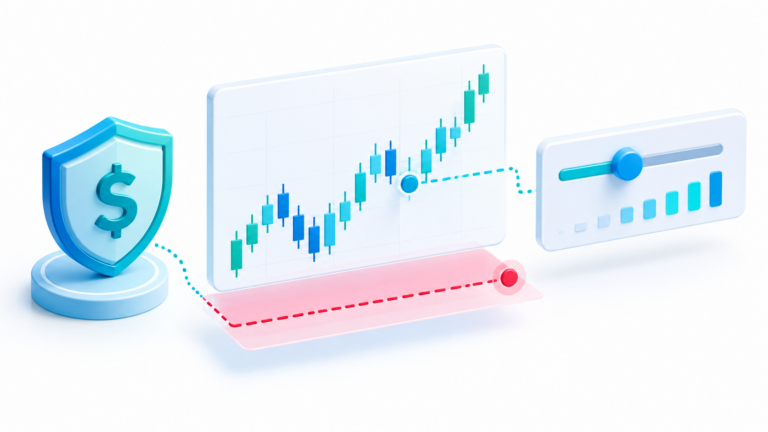
With isolated margin, you allocate a defined amount of collateral to a single position. If that position loses, its loss is generally contained to the margin assigned to it, subject to the exchange’s contract rules, fees, and liquidation process. Other available funds are not automatically used to keep that position alive.
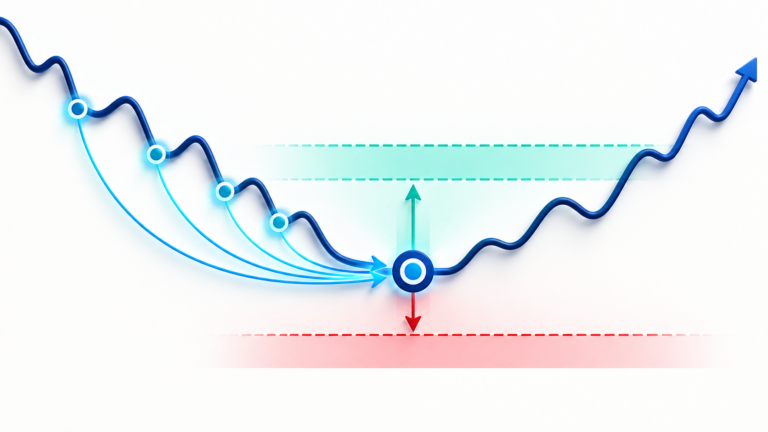
With cross margin, the position draws on available equity in the shared margin balance. This can move the liquidation threshold farther away when the account has spare collateral, but a losing position can also put more of that shared balance at risk. If several positions are open, their unrealized profit and loss can affect one another.

How Isolated Margin Works
Think of isolated margin as a ring-fenced trade budget. Before opening a position, you choose the margin allocated to it. A 10x long with $100 of isolated margin has roughly $1,000 of notional exposure before fees and contract details. If price moves against the position, the exchange measures that position against its own assigned collateral and maintenance-margin requirement.
The practical advantage is containment. A poorly planned trade is less likely to consume funds reserved for other positions or for withdrawal. It also makes risk review simpler: you can see the collateral dedicated to that idea instead of treating the whole account as one pool.
The trade-off is that isolated positions can reach their liquidation threshold sooner than an equivalent cross-margin position with spare account equity. On many venues, you may add or remove isolated margin manually after entry; doing so changes the buffer and can change the estimated liquidation price. It does not change the fact that the underlying position still has market risk.
How Cross Margin Works
Cross margin treats eligible collateral as a shared account-level resource. A losing position may be supported by unused balance or by unrealized gains from another position. This can be useful for traders who actively manage several positions and understand their combined exposure.
That flexibility is also its main risk. A position that starts as a small idea can draw on funds you mentally allocated elsewhere. A profitable position may temporarily offset a losing one, but that support can disappear if both markets move unfavorably. In correlated markets, several positions can weaken together just when the shared cushion matters most.
Cross margin is therefore not a substitute for a stop loss or a position-size limit. It is an account-level collateral method. You still need a planned exit, a maximum dollar loss, and enough room for funding, trading fees, and normal volatility.
Isolated vs. Cross Margin: What Actually Changes?
| Question | Isolated margin | Cross margin |
|---|---|---|
| Collateral source | Margin assigned to that position | Eligible shared account equity |
| Loss containment | Usually limited to the position’s assigned margin | Can affect more of the shared margin balance |
| Liquidation buffer | Depends on assigned margin and maintenance requirement | Can use spare account equity, so it may be larger |
| Portfolio interaction | Positions are more separated | Open positions can influence each other through shared equity |
| Best described as | Position-level risk control | Account-level collateral management |
The exact mechanics vary by exchange and contract. Maintenance-margin tiers, funding payments, settlement currency, auto-deleveraging rules, and whether unrealized P&L is counted can all affect the result. Read the contract specification for the venue you use; for example, Binance’s futures margin-mode guide explains the general distinction between isolated and cross modes.
Why Your Liquidation Price Can Move
Liquidation price is an estimate, not a fixed promise printed at entry. In isolated mode, adding margin usually gives a position more room, while removing margin reduces that room. In cross mode, changes in other positions, realized fees, funding payments, deposits, withdrawals, and account equity can all change the available buffer.
For a long position, liquidation generally becomes more likely as the market falls toward the maintenance-margin threshold. For a short position, the pressure is in the opposite direction. But a simple entry-price-and-leverage shortcut misses important details: contracts use maintenance requirements, and exchanges may apply different risk tiers as size increases.
That is why the liquidation estimate should be treated as one pre-trade check, not as the exit plan. A stop loss placed before liquidation, combined with an appropriately sized position, gives you more control over the amount you are willing to lose.
When Each Margin Mode May Fit
Isolated margin may fit when you want a defined trade budget
Isolated margin is often easier to reason about when you are testing a single setup, holding unrelated trades, or building the habit of assigning a clear dollar risk per idea. It can also make post-trade review cleaner because the collateral and P&L are more visibly tied to one position.
Cross margin may fit when you intentionally manage combined exposure
Cross margin can make sense for an experienced trader managing a hedged or closely monitored set of positions. The decision should be deliberate: understand which balances are eligible, how correlated the positions are, and what happens if the portfolio moves against you at the same time.
A useful question is not “Which mode gives me the lowest liquidation price?” It is “What is the maximum account-level loss I accept if my assumptions are wrong?” That question naturally leads back to position sizing, stops, and total exposure.
Use a Liquidation Calculator Before You Enter
Before sending an order, estimate how entry price, leverage, margin mode, and extra collateral change the distance to liquidation. The Liquidation Price Calculator is designed for that pre-trade comparison. Run the same proposed trade with a conservative assumption, then ask whether your planned stop is comfortably ahead of the liquidation estimate.
It also helps to pair that check with a fixed-risk position-size calculation. A larger margin buffer does not make an oversized position small; it only changes how much adverse movement the account can absorb before the exchange’s liquidation process begins.
A Practical Margin-Mode Checklist
- Choose the margin mode before entering, rather than accepting the platform default without checking it.
- Write down the entry, invalidation level, stop loss, and maximum dollar loss.
- For isolated positions, confirm the exact margin allocated and whether adding margin is intentional.
- For cross-margin accounts, review every open position and the total exposure to correlated assets.
- Allow for fees, funding, slippage, and exchange-specific maintenance-margin rules.
- Use the liquidation estimate as a warning boundary—not as permission to let a trade run that far.
Margin mode is a tool for controlling collateral, not a forecast of price. Isolated margin offers clearer separation; cross margin offers shared flexibility and shared risk. The right choice is the one that matches a written risk plan and keeps a single losing trade from becoming an account-level surprise.
Further reading: Position and Risk Management — CME Group.
Educational content only; this article is not investment advice. Futures products carry a substantial risk of loss, and exchange rules can differ by contract and jurisdiction.