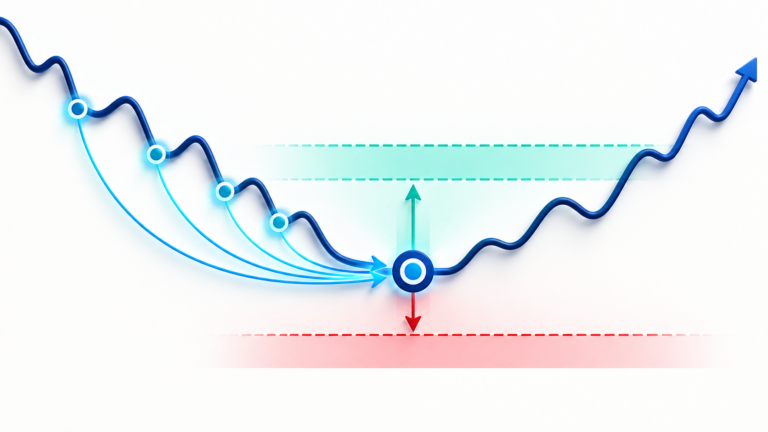

Calculate break-even after partial take profits starts with a risk question, not a prediction. Partial take profits change the trade. Once part of a position is closed, the remaining size, realized profit, and exit costs determine where the whole idea reaches break-even—not simply the original entry price.
Table of contents
Define break-even for the whole trade
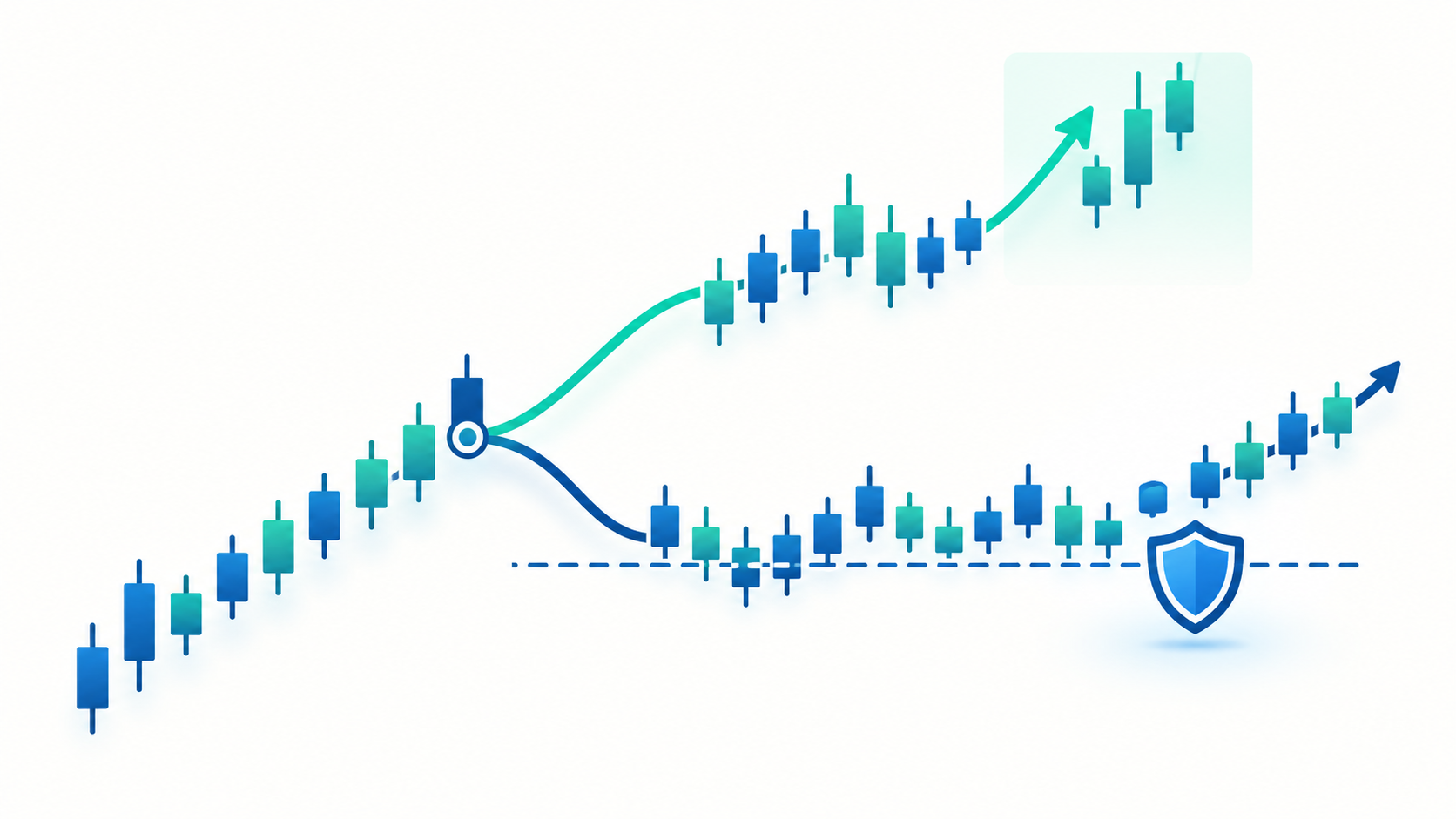
After a partial exit, break-even can mean the price where total realized and unrealized P&L equals zero. That is different from moving the stop on the remaining position to the original entry. Both may be useful, but they answer different questions.
Record the size and price of every partial
The calculation needs the original size, entry price, each portion closed, and the price received. A larger early partial at a favorable price can allow the remaining position more room; a small partial may not offset the risk left on the runner.
Include all execution costs
Fees are paid on the closed portion and usually again when the remainder exits. Funding may also apply. Ignoring them makes a displayed break-even level slightly optimistic, which matters when the market is moving in small increments.
Do not confuse a risk-free runner with a good trade
Moving a stop to entry after taking profit can reduce downside, but the remaining position still has opportunity cost and execution risk. Decide in advance whether the runner has a target, a trailing rule, or a time-based exit.
Make the plan before the first partial
A partial-exit plan is strongest when it is defined before entry: what fraction comes off, where it comes off, and what changes for the remaining position. That keeps a favorable move from turning into improvised risk management.
Use the Break-Even Calculator Before You Enter
Turn the idea into numbers before placing an order. The Break-Even Calculator helps you compare the relevant inputs and check whether the planned risk still fits your account rules.
A Practical Checklist
- Define the maximum dollar amount you are willing to lose before entry.
- Check fees, funding, margin mode, and liquidation risk where relevant.
- Use the information in this guide as context rather than a standalone signal.
- Write the invalidation level and exit rule before the trade is live.
- Review the result after the trade so the next decision is evidence-based.
For a related risk-management guide, read Trading Fees and Funding Rates: The Costs Traders Miss. The goal is not to eliminate uncertainty; it is to make sure uncertainty cannot turn one idea into an uncontrolled loss.
A Partial Exit Can Move the Trade’s Break-Even
Consider a hypothetical long of 10 units entered at 0, with 4 units sold at 0. Ignoring fees, that partial sale realizes . Six units remain. To make the combined trade’s gross result zero, those remaining units would need to be closed at about .33: the gain offsets a loss on the remaining 6 units. This is different from asking for the remaining position itself to break even at the original entry price.
Fees change the result. Entry fees apply to the original position; the partial exit and final exit can add separate charges. Funding, slippage, and contract multipliers may also matter. The calculator’s result is an estimate based on the values entered, not a guaranteed exit price or a recommendation to hold a losing position.
Further reading: Maker and Taker Fees — Binance Support.
Educational content only; this article is not investment advice. Futures and perpetual products carry a substantial risk of loss. Contract mechanics, fees, and available products vary by exchange and jurisdiction.