
Simple Futures Trade Plan is a risk-management topic before it is a performance topic. A trade plan is not a prediction. It is a short set of decisions made while you are calm: where to enter, where the idea is wrong, how much to risk, and how the position will be managed if price moves.
Table of contents
Simple Futures Trade Plan: A Practical Framework
Simple Futures Trade Plan works best when it is applied before entry and reviewed after the trade. It should help control the amount at risk, not create confidence that a market outcome is certain.
Start with the invalidation level
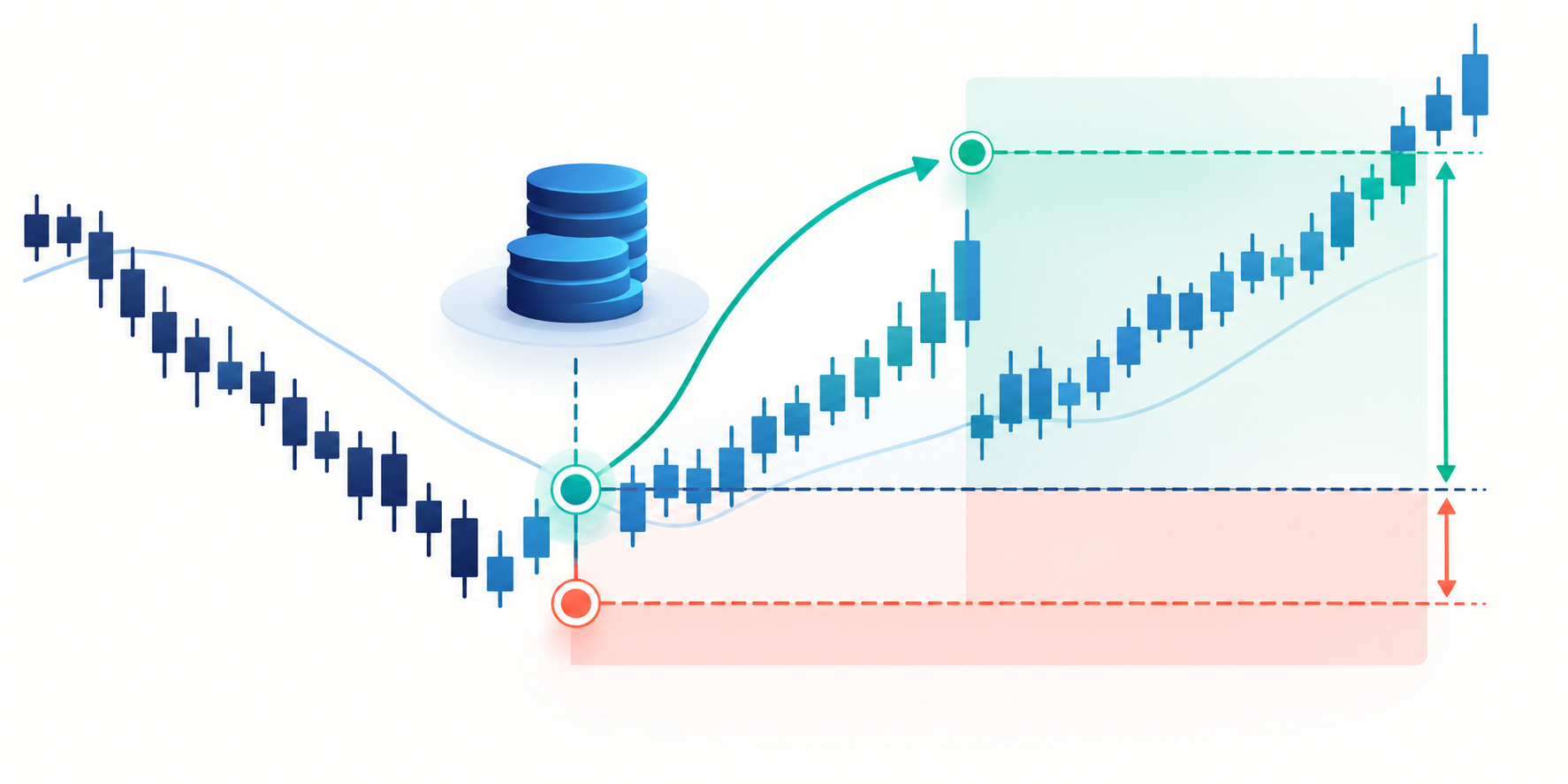
The stop belongs at the price where the setup is no longer valid, not at a distance chosen to make a desired position size fit. A long and a short need different invalidation logic, but both need a price level that can be explained before entry.
Calculate position size from the stop
Choose a fixed dollar amount you can lose, then divide it by the distance between entry and stop. This links size to risk. Leverage changes collateral required to carry the position; it does not change the loss created by a given size and stop distance.
Treat the target as a management rule
A target can be a full exit, a level for a partial take profit, or a point where the stop is adjusted. It should be based on the trade thesis and market structure, not on the need to make a losing trade look attractive on paper.
Check costs and liquidation distance
Fees, funding, slippage, and maintenance requirements matter most when the stop or liquidation estimate is close. The intended stop should be reached well before liquidation in a normal exit plan. If it is not, reduce size or reconsider the structure.
Write the plan before the order is live
A compact note with entry, stop, risk amount, quantity, target, and reason for the trade is enough. Recording those inputs makes it possible to review execution later instead of judging a decision only by whether it won.
Common Mistakes to Avoid
A trade plan is incomplete until its numbers agree. For a hypothetical linear long entered at $100 with invalidation at $98, a $50 price-risk budget permits 25 units before costs. A target at $104 would imply $100 of gross price gain if filled. If the actual entry becomes $101 while the stop remains $98, 25 units would risk $75, so the plan needs a smaller size or a new setup.
Keep simple futures trade plan connected to the same process. Use it before entry, use it when conditions change, and use the post-trade review to identify whether the plan or its execution needs improvement. This approach is deliberately less exciting than reacting to every move, but it makes risk measurable and repeatable.
Use the Calculators Before You Enter
Translate the plan into inputs before sending an order. The Position Size & Stop-Loss Calculator and Partial TP Break-Even Calculator can help test position size, remaining break-even, costs, or liquidation distance using your own assumptions. These tools provide estimates, not trading signals.
A Practical Checklist
- Write the entry, invalidation level, maximum dollar loss, and quantity.
- Check whether fees, funding, and likely slippage fit inside the loss budget.
- Confirm the liquidation estimate is not the intended exit.
- Use simple futures trade plan to improve a risk plan, not as a standalone prediction.
- Review the actual result and execution after the position is closed.
Further reading: Futures Trade Plan — CME Group. Check the contract and fee rules published by the venue you use.
Further reading: Futures Trade Plan — CME Group.
Educational content only; this article is not investment advice. Futures and perpetual products carry a substantial risk of loss. Rules, fees, and available products vary by exchange and jurisdiction.