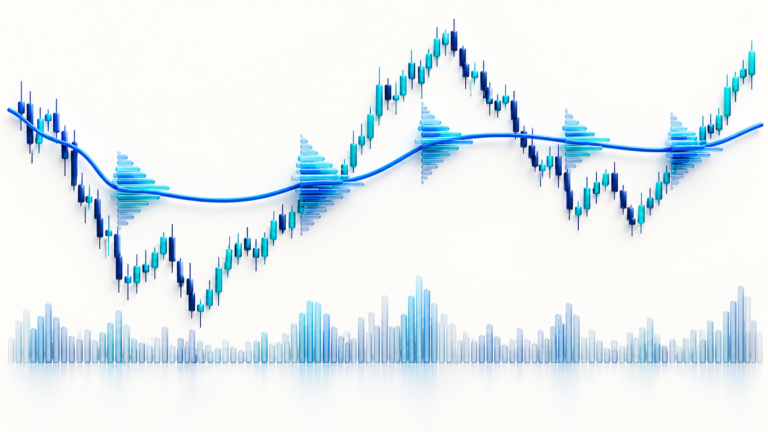

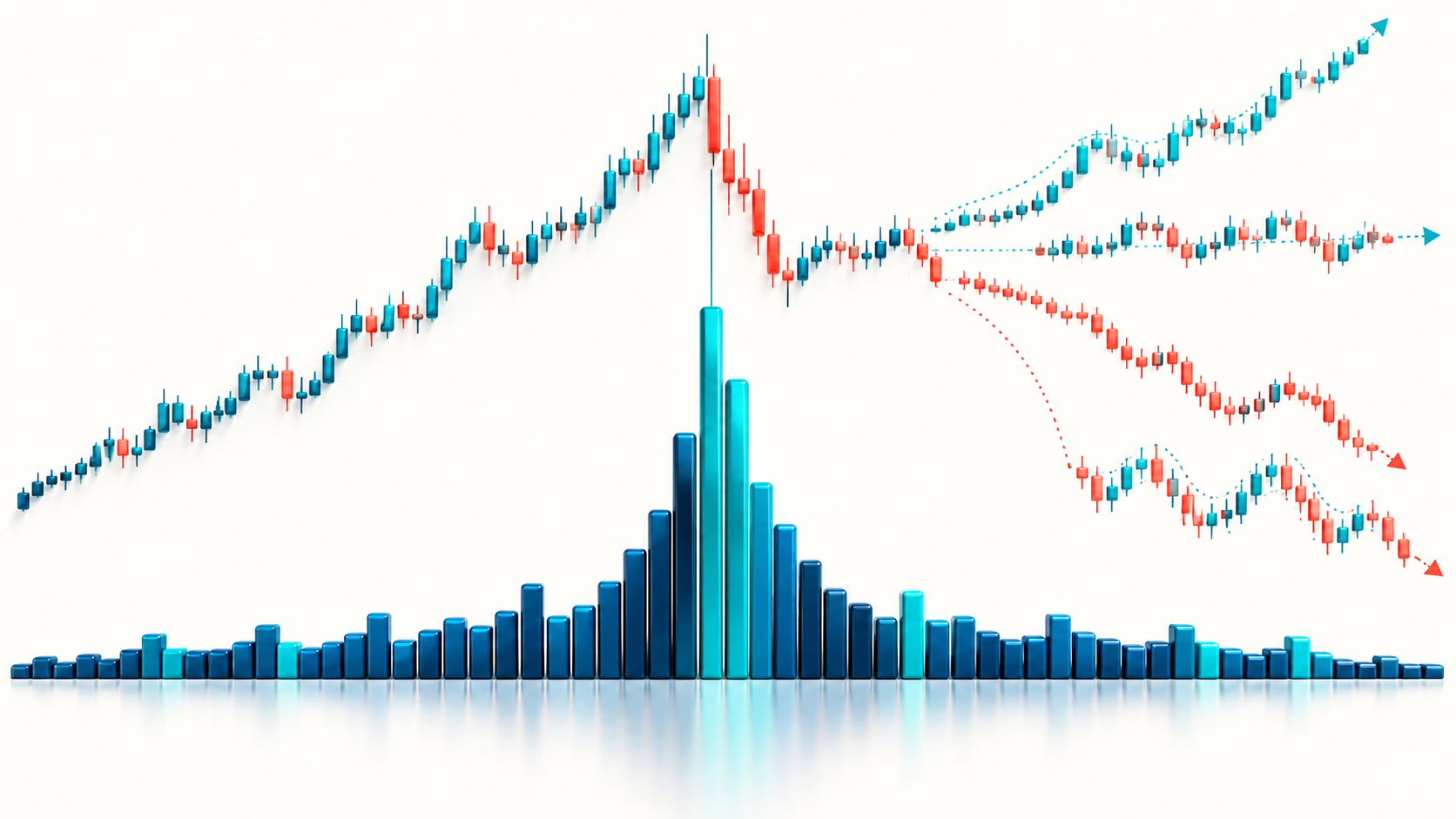
A volume bar that towers over nearby bars is visually striking, but the number needs context. It may reflect a scheduled event, a liquidation cascade, a session transition, or ordinary activity for that time of day. A spike records traded activity as defined by the data source; it does not reveal every participant’s intent.
Check What the Feed Calls Volume
Volume can mean shares, contracts, base-asset units, quote-currency notional, or another venue-specific measure. In crypto, one exchange’s volume series may cover only its own market, and different venues can report different units. Before comparing bars, confirm the symbol, venue, interval, and whether the chart displays base or quote volume.
Compare the current bar with similar bars: the same instrument, interval, and time-of-day pattern. A 30-minute bar at a busy session open should not be compared blindly with a quiet overnight bar. Relative volume can be a useful normalization, but its lookback method also needs to be stated.
Read the Price Response, Not Just the Bar
Consider a wide-range candle on a large volume bar that closes near its high. That is one observation about activity and the closing location. It does not prove that buyers will remain in control. A similar volume bar with a long upper wick and a close back inside a prior range describes a different price response. Neither pattern gives certainty about the next bar.
Open interest can add a separate measure of outstanding derivatives contracts, but it is not a direct count of buyers versus sellers. Every open contract has both sides. Volume and open interest together still require price, contract, and venue context.
Avoid Calling Every Spike “Confirmation”
Write the conditions in advance: what counts as unusually high relative volume, what price behavior would support the hypothesis, what would invalidate it, and how the measurement handles a still-forming candle. If a spike occurs after the move has already traveled far, the information may describe past activity rather than offer a useful entry.
Where a stop is used, calculate quantity independently. A volatility event can widen expected slippage, so the theoretical stop loss may understate the realized loss. Size estimates from the position calculator do not model sudden gaps or guarantee execution.
Keep the Data Source in the Record
Save the chart provider, venue, contract type, time zone, interval, and any volume conversion. That makes a later review reproducible and helps explain why a chart on another platform may look different.
Sources and further reading
Educational information only; this article is not investment advice. Futures and perpetual products can result in rapid losses. Exchange rules, fees, contract units, and available products vary. Verify details with your venue before acting.